Developing Integrated
Knowledge Management Solutions
Based On The Unique Social And Knowledge Character
Of Organizations
Anitha Srinivasan, Barry Horowitz, University of Virginia
ABSTRACT:
This paper describes a methodology that seeks to integrate concepts from the diverse fields of organizational psychology, statistical modeling and knowledge management in order to help organizations tackle complex problems that do not lend themselves to being addressed through more traditional problem solving methods. Fundamentally, the methodology is focused on the discovery of the root causes of a given organizational challenge, using both qualitative and quantitative analysis. It includes the development of a model that links organizational causes and their effects as they pertain to specified business challenges and, as a result, helps to identify possible courses of action for improving matters. The methodology is demonstrated through a ‘case study’ conducted to address a particular business issue facing an operating division of MITRE Corporation, namely the challenge of enhancing their innovation throughput. Using information gathered from employee surveys, the most significant factors influencing the innovation throughput are identified with the help of a quantitative analytical technique called Partial Least Squares. Based on the Social and Knowledge characters of the organization, as determined from employee surveys, solutions that are compatible with the organization’s characteristics can be developed to address the problems. To complete this paper, a discussion on the efficacy of hypotheses-based model construction and the importance of the skills of the modelers is provided, based on observations from a simulated experiment.
Introduction
There exist a myriad of articles about Knowledge Management (KM) that have been published in reputed business publications. It is no exaggeration to say that this bustling field has now become several organizations’ primary focus of interest. It has become critical that an organization actually ‘knows’ what it knows, to be competitive.
KM calls for understanding and treating each organization as a unique entity while seeking to assess the utility of engaging this important business lever. Such an understanding of the organization can be difficult to develop and reduced solution efficacies can result when one tries to generalize learnings and apply generic ‘one size fits all’ KM frameworks to all organizations (MacCoby, 2002), (Blackler, 1995). This is because knowledge management falls into a category of organizational problems that are deeply interwoven into the fabric of each organization’s culture and character.
Throughout this paper, the point that organizations should be treated sensitively in order to raise the likelihood of successful KM work is emphasized. Recognizing this need, a problem solving approach that is customized to the unique needs of an organization by embedding an understanding of the organization’s sensitivities into the KM solution has been developed.
Our research methodology addresses the question “what are the root causes of given organizational challenges faced by individual companies?” It includes the development of a model that links ‘causal’ factors and their effects as they pertain to specified business challenges driven by KM. The model includes features hat account for the cultural aspects of an organization as well as the more evident causal factors. The culture of an organization is defined by its Social and Knowledge character as discussed later in this paper. A case study is presented where the organizational challenge that is addressed is defined by the case organization’s senior management. The IT division of the MITRE Corporation[1], a Fortune-500 organization focused on government systems was chosen for the case study. Using information gathered from employee questionnaires, the root causes of the identified business challenge were determined, and rank ordered. This rank ordering provides the basis for proposing KM solution areas to the organization. The principal analysis technique used was Partial Least Squares (PLS) (Barclay et. al., 1995), (Hulland, 1999).
The rest of the paper is organized as follows. First, the relevant literature is briefly reviewed. Next, the overall methodology is explained, followed by a detailed explanation of some of the critical steps in our approach. This material includes the definitions of an organization’s Social and Knowledge characters. Then the methodology for creating a customized Root Causes Analysis (RCA) model based on the specific character of an organization is presented. The RCA model calibrates hypothesized causal factors for a business situation, inter-relationships among them and their linkage to the problem at hand. This is followed by the case study, where our methodology was applied to MITRE. Next, a discussion on the efficacy of hypotheses-based model construction and the importance of the skills of the modelers is provided, based on observations from a simulated experiment. Finally, the important conclusions from this study are provided along with broad suggestions for future work.
Literature Review
KM literature can be broadly classified as falling into following four major categories:
1. The first category of work includes literature that touches every aspect of KM. These serve as practitioner handbooks or compendiums of thought pieces or universal references on KM. Examples include (Tiwana, 1999), (Cross and Israelit, 2000), and (Davenport and Prusak, 1998). While works falling in this category serve as a good summary of what an organization needs to know about KM in general, they do not provide specific recommendations on what any given organization should actually do in the area of KM.
2. The second category (Harvard Business Review Press, 1998), (Pfeffer and Sutton, 2000), (O’Dell and Grayson, 1998), (Myers, 1996), and (Ruggles, 1997) of work includes those that exhort organizations to look inwards for knowledge as well as management practices. The KM Best Practices literature seeks to focus greater attention on seeking internal leverage instead of imitating competitors or pursuing technology aggressively. These works try to make their points using many case studies. While these works are the best writings available that help organizations identify “what they should do about KM”, they are mainly process oriented and do not provide a customized way of tackling KM related issues that effectively meets each organization’s individual needs.
3. The third category of works includes material written about KM theoretical frameworks involving organizational strategy and organizational behavior based explanations as they relate to business management and KM. Examples include (MacCoby, 2002), (Goffee and Jones, 1998), and (Bridges, 1993) that introduce and discuss “Social” and “Knowledge” characters of an organization. These articles are vital in understanding how organizations have shaped themselves over time and provide an insight into how their existing challenges have materialized. However, these works have not gone beyond a description of organizational character types (with some illustrations) and have not attempted to determine how specific organizational characteristics create the nature of problems faced. They provide generic frameworks to understand organizational character types that are useful to an organization for identifying itself within one of the categories described, but are not prescriptive of action steps to gain additional business value.
4. The final category of literature includes works on qualitative and quantitative knowledge management based measurement concepts. These include topics ranging from measuring KM’s contribution to business performance, to measuring the state of KM in an organization, to intellectual capital evaluation. Articles such as (Blackler, 1995), (Hulland, 1999) and (Bontis and Fitz-enz, 2002) fall in this category of works. These articles have focused on providing organizations with a set of quantitative tools to measure the value creatable and value realized by KM pursuits. They have been pioneering in borrowing statistical techniques like PLS that have been used in a variety of other fields and creatively applying them to the KM context across organizations. While these techniques produce generalized results and generic measurement methodologies, they have not provided organizations with customized approaches to deal with marrying their culture to their needs.
The work reported here provides a new KM approach that integrates concepts and methods from literature categories three and four described above. The suggested approach is A) quantitative, B) organization-sensitive, and C) customized to address an organization’s specific business challenges/ opportunities, arising from its inherent behaviour and cultural characteristics.
Methodology
The suggested methodology provides an approach for organizations to choose between and adjust their emphasis on alternative approaches to KM as they specifically relate to solving particular business challenges or adapting to new business opportunities. Included in the set of KM approaches that might be under consideration might be: 1) brainstorming among senior management 2) simple employee opinion surveys 3) use of published corporate case studies 4) use of qualitative KM approaches from KM publications 5) use of quantitative KM methodologies from KM publications.
Our methodology integrates various elements from the above mentioned approaches that an organization might consider. It includes identification of a business challenge in conversation with the senior management, establishing the character of the organization (to customize the approach) through employee surveys, in collaboration with senior management development of hypotheses for root causes that can impact the business challenge at hand, and determination of the relative importance of different causes on the desired outcome through use of quantitative techniques on data collected through employee surveys. The premise for this analysis is that the best way to measure the potential for KM is through developing models that view corporate interactions as seen through the eyes of the employees.
The first step in our approach is to conduct an executive interview with the participating organization to determine its business challenge addressable by KM solutions. At this stage of executive interaction, it is vital to develop a comprehensive description of the problem and discuss senior management’s hypotheses on potential causes / solutions to the problem. This helps in two ways. First, one can build on these initial hypotheses as one attempts to construct an organization specific RCA model. Second, these initial hypotheses to the solutions can later be compared to results obtained through use of the RCA model.
As a second step, the participating organization is characterized based on its Social and Knowledge characters, with the help of a survey administered to its employees.
Third, the RCA model is built by hypothesizing and defining root causes (constructs) and their manifestations (measures). For each of these measures, questions are developed (that vary according to the Social and Knowledge characters) to capture whether or not the root cause manifestation exists in a specific form and further to capture the degree to which it exists.
In the fourth step, another survey is administered to collect employee responses to the root causes and manifestations identified. The data required to populate the RCA model is captured using questions with Likert-type responses.
As a fifth step, the RCA model is quantified using the PLS methodology. PLS is used to rank order the identified root causes of the organization’s problem, based on their quantitatively determined explanatory power (R2, the co-efficient of determination).
As a final step, a KM solution that addresses the most significant root causes, while being sensitized to the organization’s unique character, is provided. Figure 1 shows these six steps in the methodology.
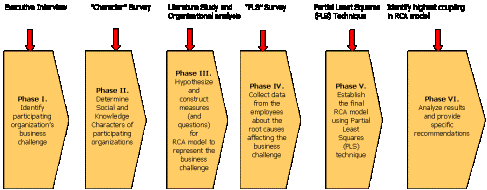
Figure 1 Methodology Steps
Social
and Knowledge Characters
An organization finds itself at the place where it is today because of conscious choices it made in the past. These choices range from strategic business direction to organization structures to personnel policies and compensation decisions etc. From among these, the choices made on the organization’s culture and core values, are the ones that most significantly influence the nature of problems it encounters in the future. An organization’s founders play perhaps the most important role in shaping an organization’s culture and core values. This fact leads us to acknowledge that just as each individual leader/founder is different, each organization is different from the others. To capture this uniqueness, the use of Social character and Knowledge character of the organization is chosen to ‘prescribe’ a customized KM solution to address its business challenge.
Social character reflects the dynamic values or emotional attitudes shared by the senior management with the employees within its organization. Depending on the social character traits, ideals, and ideology that prevail in an organization, Dr. Michael MacCoby (President of the MacCoby Group in Washington, D.C.) has classified them as being either a “bureaucratic” or an “interactive” organization (MacCoby, 2002).
Figure 2 summarizes the organizational social character. Note that while the ‘Ideology and Ideals’ are directly taken from Dr. Maccoby’s work, the ‘Social Character Traits’ section is slightly abridged from (Bridges, 1993) and (Goffee and Jones, 1998).
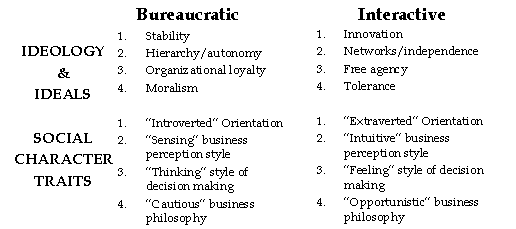
Figure 2 Social Character Description
Knowledge character is the other factor that is considered in the process of organizational characterization. Identified in the literature (Collins, 1993) are at least five images of knowledge: knowledge that is embrained, embodied, encultured, embedded, and encoded. The 2 X 2 matrix (Blackler, 1995) given in Figure 3 shows how organizations can be classified based on the different types of knowledge. In particular, four kinds of organizations are identified: “expert dependent”, “knowledge routinized”, “analyst dependent”, and “communication intensive”. Each of these depends on different degrees of embodied knowledge, embedded knowledge, embrained knowledge and encultured knowledge respectively.
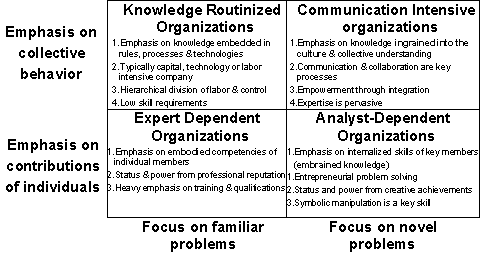
Figure 3 Knowledge Character Description
It is imperative that the Social and Knowledge character of an organization is determined for two reasons. First, different organizations exhibit different symptoms for the same KM problem. Second, not all KM solutions would work successfully in all kinds of organizations.
RCA
Model And The PLS Technique
Root cause models are similar to conceptual models (Barclay et. al., 1995) that consist of:
§ Problem-specific hypotheses or CONSTRUCTS (also known as entities, that are items of direct interest but not directly measurable within the organization)
§ MEASURES that are manifestations of the hypothesis constructs (also known as attributes that can be more easily observed in the participating organization). These measures are related to the constructs either in a formative sense (measures define the construct) or in a reflective sense (construct defines the measures)
§ Causal paths linking the constructs (also known as relationships or influence paths).
PLS, a structural causal modeling technique is used to rank order the root causes in our RCA model. The PLS methodology is used to build a linear model, Y= f(X) + Error Term, where, in this application, Y= Business Challenge; X = Root Causes. Further, each of the root causes are themselves linearly regressed with their measures, to arrive at strong measurement equations for the root causes. (Barclay et. al., 1995) details the analytics behind this statistical technique.
MITRE
Case Study
The MITRE Corporation is an international not-for-profit organization that applies its expertise in systems engineering, information technology, operational concepts, and enterprise modernization to address its sponsors' critical needs. MITRE has headquarters in Bedford, Massachusetts, and McLean, Virginia, with 60 sites around the world. Specifically, the employees of IT (G-060) division of MITRE were chosen to be the respondents of our two surveys.
During our executive interview with MITRE division, its senior management expressed its desire for increasing innovation in the solutions offered to its customers. They expressed a desire to develop KM solutions that included more tangible expectations about the future with regard to innovation and a corresponding organization-wide alignment of goals to these expectations.
A sequential approach was used for coming up with an initial set of root cause hypotheses for enhancing innovation throughput in professional services organizations like MITRE. Starting off with the primary driving force in a service organization – the customer, root cause constructs were defined sequentially, along with their associated measures and measurement relationships.
1. Customer emphasis on innovation: Innovation in service companies can depend on how desirable it is to customers and whether the customers drive it or not. In MITRE’s case, if the principal customers (Government organizations) are not willing to see enough value in innovation, then it can lead to being a root cause for the innovation problem. The measures under this construct are Strength of customer emphasis on innovation during project conception and Strength of customer commitment to innovation during project execution. These are reflective variables because these are specific measurements of the ‘higher-level’ construct taken at two different phases of a project.
2. Managerial enthusiasm and participation: Even if customer emphasis exists, if leadership in a company is not very enthusiastic about innovation, it can be a root cause for the innovation problem. This construct is measured through Extent to which senior management exercises influence in building innovation into the project and Quality of innovation influence from senior management. These variables are reflective of the over-arching construct definition – managerial enthusiasm and participation.
3. Innovation Skillsets/ Knowledge: Even if leadership enthusiasm and customer emphasis existed, if new skill sets required to harness innovation do not exist, it would hamper innovation throughput. Associated measures are Degree to which skillset/ knowledge development is focused towards specific innovation areas and Effectiveness of skillset development mechanism. These variables are formative as they define the construct in specific terms.
4. Innovation Enablers: Even assuming that all preceding constructs are not a problem, ineffective innovation enablers (like Training, Documentation / Publications, Expert Interaction (Consultants / Conferences / Academia), Discussion / Collaboration Forums etc.) can also be a root cause. Measures belonging to this construct are Degree of emphasis on skill set / knowledge development enablers and Effectiveness of existing innovation enablers. These variables are formative as they define the construct in specific terms.
5. Innovation Focus: Even if leadership emphasizes innovation and highly skilled resources exist to harness innovation using effective enablers, if the innovation effort is unfocused, problems could arise. This construct is measured using two formative variables Ability of organization to have continuity of focus in innovation and Effectiveness of Innovation agenda setting.
6. Knowledge Creation for Re-use: Assuming all other factors are favorable, problems can still arise out of inefficiencies in projects that might result in delayed completion (and knowledge creation) or aborted/incomplete projects that result in inefficient knowledge creation. This construct has two formative measures - Efficiency of knowledge creation process and Effectiveness/ quality of innovation/knowledge creation.
7. Knowledge Capture/Codification: Even if the most efficient innovation or knowledge creation process exists, if adequate mechanisms for knowledge capture do not exist, it may not facilitate wide adoption of innovations across the organization and it would not spur new innovations. Two measures form this construct, namely, Effectiveness of organizational knowledge capture mechanism and State of advancement in use of Knowledge capture infrastructure.
8. Knowledge Sharing: Captured knowledge needs to be effectively shared and disseminated across the organization. This construct is defined by three measures - Effectiveness of organizational knowledge sharing mechanism, Degree of usage of knowledge sharing infrastructure and Extent of use of knowledge sharing best practices.
9. Resource Allocation: With all given facilities, skillsets and organizational characteristics for innovation, there can be insufficient innovation if allocation of resources is not sufficient. Two formative variables define this construct - Effectiveness of resource allocation and Efficiency of resource allocation.
10. External Forces of Influence: If all previously listed factors are favorably co-existent in an organization, then lack of external pressures to innovate beyond existing levels can be a root cause to the problem. For example, in MITRE’s case, other companies may be providing professional services to the same client at the same time. This can create an informal competition for which innovation might be a very important differentiator. Where competition is not prevalent the customer has a bigger say in whether innovation can be pursued or not. This construct is measured through Degree of influence exerted by 'external factors' on innovation by organization and Degree of influence exerted by 'external organizations' on innovation. These variables measure two different forms of external influence and hence are sub-categories under the overall category defined by the construct. Hence, they are reflective.
11. Organizational Incentives/ Recognition: Even if external pressures to innovate do exist, lack of incentives to innovate or lack of recognition at the organization level can be a root cause. For example, in MITRE’s case, if the government does not insist on innovation and is not ready to support the required R&D to create innovative engineering solutions, then MITRE employees do not need to emphasize innovation as an objective.
This construct is measured using Extent to which external entities affect organizational incentives for innovation and Extent to which there exist strategic incentives for organization to innovate. Again, these variables form two sub-categories under the macro-category of organizational incentives and hence these are reflective measures.
12. Team/ Individual Incentives: Even if organizational incentives exist, if adequate team or individual incentives do not exist, then innovation will not occur. Team or individual performance evaluation should include criteria or metrics on innovation in order to effect innovation in the organization. Measures include Extent of incentivization to project teams/individuals to pursue innovation and Effectiveness of incentives to capture and share knowledge. These measures are two different types of incentivization and hence these can exist only if the concept of team/individual incentives exists within the organization. Therefore, these measures reflective of the overall construct.
Finally, the main dependent construct is defined as Innovation Throughput measured using three variables - Employee satisfaction with amount of innovation, External constituents’ satisfaction with amount of innovation and Degree of improvement possible in innovation throughput. Here, innovation throughput is the macro variable whose magnitude is measured in ordinal terms through these measures. Therefore, given that these measures depend on the definition of innovation throughput for their existence, they are reflective measures.
Having defined the constructs, measures and their relationships, the path relationships (both direct and indirect) between the constructs were hypothesized using our theoretical knowledge. The RCA model was then finalized based on the knowledge we obtained about the MITRE division through our interactions with them. Participation from the members of the organization was very crucial in defining our initial hypotheses especially on path relationships. Only with employee inputs, could one make a determination of how “they” feel about the issue. This organizational judgment puts an apriori or an additional likelihood on some of the areas of concentration (constructs) being more important than the others and helped in defining boundaries for the number of constructs to be included in our sequential approach. Figure 4 shows the initial RCA model that was constructed for MITRE.
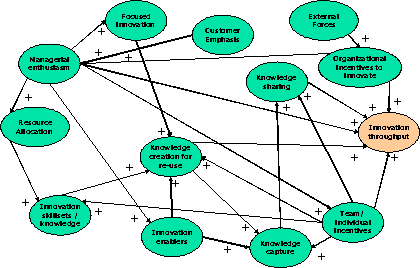
Figure 4 Initial RCA Model for MITRE Division
In order to customize the questions that captured data on the model measures, we needed to know MITRE’s character. Both Social and Knowledge characters of MITRE were captured using a survey with 48 Likert-type scale questions. The survey sample consisted of 52 respondents from among a pool of technical staff including network systems engineers, information systems engineers and artificial intelligence engineers. The survey was uploaded on to a website, whose URL was e-mailed individually to the respondents. It was self-administered through this website because of the geographic dispersion among MITRE employees, ability to reach a larger sample of respondents, and quicker turnaround
Using this survey, it was found that the characters differed by location. The Bedford, MA location of MITRE was found to be Interactive and Communication Intensive, while the McLean,VA location was found to be Bureaucratic and Communication Intensive. The questions in the second survey were customized based on these identified characters.
The PLS technique was then employed on the data collected to quantify the RCA model. Before evaluating the results, psychometric evaluations were performed for assessing the measurement model and the structural model. When we performed the initial psychometric evaluation and computed the R2 contributions, we found that two of the paths (bolded in Table 1) we had originally hypothesized were redundant.
|
MAIN |
CEMP |
MEMP |
ISK |
IEN |
IFO |
KCR |
KCAP |
KSH |
RALL |
EXT |
ORG |
TEAM |
|
MAIN |
0 |
0 |
-0.07 |
0 |
0 |
0 |
0.30 |
0 |
0.13 |
0 |
0 |
0.08 |
0.29 |
|
CEMP |
0 |
0 |
0 |
0 |
0 |
0 |
0 |
0 |
0 |
0 |
0 |
0 |
0 |
|
MEMP |
0 |
0.03 |
0 |
0 |
0 |
0 |
0 |
0 |
0 |
0 |
0 |
0.27 |
0 |
|
ISK |
0 |
0 |
0 |
0 |
0 |
0 |
0 |
0 |
0 |
0.05 |
0 |
0 |
0.34 |
|
IEN |
0 |
0 |
0.20 |
0 |
0 |
0 |
0 |
0 |
0 |
0 |
0 |
0 |
0 |
|
IFO |
0 |
0 |
0.17 |
0 |
0 |
0 |
0 |
0 |
0 |
0 |
0 |
0 |
0 |
|
KCR |
0 |
0 |
0 |
0.03 |
0.19 |
0.06 |
0 |
0 |
0 |
0 |
0 |
0 |
0.20 |
|
KCAP |
0 |
0 |
0 |
0 |
-0.04 |
0 |
0.17 |
0 |
0 |
0 |
0 |
0 |
0.18 |
|
KSH |
0 |
0 |
0 |
0 |
0 |
0 |
0 |
0.05 |
0 |
0 |
0 |
0 |
0.31 |
|
RALL |
0 |
0 |
0.13 |
0 |
0 |
0 |
0 |
0 |
0 |
0 |
0 |
0 |
0 |
|
EXT |
0 |
0 |
0 |
0 |
0 |
0 |
0 |
0 |
0 |
0 |
0 |
0 |
0 |
|
ORG |
0 |
0 |
0 |
0 |
0 |
0 |
0 |
0 |
0 |
0 |
0.12 |
0 |
0 |
|
TEAM |
0 |
0 |
0.49 |
0 |
0 |
0 |
0 |
0 |
0 |
0 |
0 |
0 |
0 |
R2 Contributions during the first run of LVPLS Software
Hence those paths were removed, the LVPLS software re-run, psychometric evaluation re-performed and the R2 contributions re-computed. Three metrics were examined to assess the soundness of the measurement model. These were Individual item reliability[2], Internal Consistency[3], and Discriminant Validity[4]. Table 2 shows the results for Individual item reliability.
|
Measures |
Loadings
on respective constructs |
|
CEMP1 |
-0.7874 |
|
CEMP2 |
-0.8966 |
|
MEMP1 |
0.554 |
|
MEMP2 |
-0.9366 |
|
ISK1 |
0.9155 |
|
ISK2 |
0.7008 |
|
IEN1 |
0.7783 |
|
IEN2 |
0.9135 |
|
IFO1 |
-0.552 |
|
IFO2 |
-0.9952 |
|
KCR1 |
-0.6873 |
|
KCR2 |
-0.9679 |
|
KCAP1 |
0.9874 |
|
KCAP2 |
0.6539 |
|
KSH1 |
0.8439 |
|
KSH2 |
0.8661 |
|
KSH3 |
0.6113 |
|
RALL1 |
-0.8016 |
|
RALL2 |
-0.888 |
|
EXT1 |
0.8328 |
|
EXT2 |
-0.8088 |
|
ORG1 |
0.8064 |
|
ORG2 |
0.7358 |
|
ORG3 |
0.688 |
|
TEAM1 |
-0.8804 |
|
TEAM2 |
-0.8622 |
|
MAIN1 |
0.8505 |
|
MAIN2 |
0.8833 |
|
MAIN3 |
0.8361 |
Table 2 Individual item reliability
Note that only 6 measures out of 29 measures fell below Fornell’s 0.707 level of reliability (Fornell, 1982). But all these exceeded the 50% acceptability level (minimum loading is 55%) (Barclay et. al., 1995). Hence all the measures were indeed strong indicators of the underlying constructs. Next, Table 3 shows the results for Internal Consistency. All internal consistency values were > 0.7. Therefore, Nunnally’s criterion (Nunnally, 1978) was met on both metrics. Hence, it can be concluded that constructs have been reliably measured by their respective measurement models. Finally, Table 4 shows the results for Discriminant Validity. Clearly all the diagonal elements (shown in bold) are greater than off-diagonal elements. Hence it can be concluded that every construct in the RCA model is significantly different from every other construct.
|
|
Internal
Consistency |
|
|
Constructs |
Fornell's
Measure |
Cronbach's
Alpha |
|
CEMP |
0.9078 |
0.9142 |
|
MEMP |
0.8449 |
0.8541 |
|
ISK |
0.8863 |
0.8939 |
|
IEN |
0.9109 |
0.9165 |
|
IFO |
0.8717 |
0.8724 |
|
KCR |
0.9027 |
0.9057 |
|
KCAP |
0.9002 |
0.9015 |
|
KSH |
0.9328 |
0.9112 |
|
RALL |
0.9094 |
0.9159 |
|
EXT |
0.8921 |
0.9016 |
|
ORG |
0.9179 |
0.8968 |
|
TEAM |
0.9265 |
0.9312 |
|
MAIN |
0.9613 |
0.9472 |
Table 3 Internal Consistency Results
|
|
Correlation of Constructs (Diagonal elements are Square root of AVE) |
||||||||||||
|
|
CEMP |
MEMP |
ISK |
IEN |
IFO |
KCR |
KCAP |
KSH |
RALL |
EXT |
ORG |
TEAM |
MAIN |
|
CEMP |
0.91 |
|
|
|
|
|
|
|
|
|
|
|
|
|
MEMP |
0.31 |
0.86 |
|
|
|
|
|
|
|
|
|
|
|
|
ISK |
0.34 |
0.55 |
0.89 |
|
|
|
|
|
|
|
|
|
|
|
IEN |
0.17 |
0.46 |
0.61 |
0.92 |
|
|
|
|
|
|
|
|
|
|
IFO |
0.22 |
0.41 |
0.63 |
0.41 |
0.89 |
|
|
|
|
|
|
|
|
|
KCR |
0.20 |
0.55 |
0.54 |
0.60 |
0.44 |
0.91 |
|
|
|
|
|
|
|
|
KCAP |
0.53 |
0.34 |
0.35 |
0.28 |
0.38 |
0.48 |
0.91 |
|
|
|
|
|
|
|
KSH |
0.27 |
0.46 |
0.57 |
0.44 |
0.54 |
0.49 |
0.39 |
0.91 |
|
|
|
|
|
|
RALL |
0.37 |
0.36 |
0.40 |
0.43 |
0.30 |
0.64 |
0.63 |
0.58 |
0.91 |
|
|
|
|
|
EXT |
0.36 |
0.34 |
0.59 |
0.29 |
0.35 |
0.16 |
0.16 |
0.39 |
0.25 |
0.90 |
|
|
|
|
ORG |
0.44 |
0.55 |
0.61 |
0.56 |
0.38 |
0.61 |
0.48 |
0.57 |
0.48 |
0.35 |
0.89 |
|
|
|
TEAM |
0.41 |
0.70 |
0.62 |
0.57 |
0.42 |
0.61 |
0.50 |
0.59 |
0.52 |
0.40 |
0.69 |
0.93 |
|
|
MAIN |
0.39 |
0.51 |
0.66 |
0.58 |
0.42 |
0.74 |
0.47 |
0.63 |
0.66 |
0.42 |
0.68 |
0.74 |
0.94 |
Table 4 Discriminant Validity Results
Next,
the structural model is taken up for assessment. The total (direct + indirect) effect was computed to
establish the relative importance of antecedent constructs. Also, the measure
of the predictive power of the model (R2 value for main dependent
construct) was computed. Figure 5 shows the total effects and R2 for
Innovation Throughput in the quantified final RCA model.
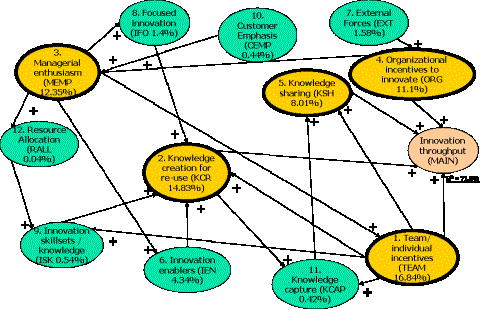
Figure 5 Final RCA model for MITRE
Note that the top five root causes that are fairly well existent at MITRE are Resource Allocation (0.04%), Knowledge Capture (0.42%), Customer Emphasis (0.44%), Innovation skillsets/knowledge (0.5%), and Innovation Focus (1.4%). Hence addressing them would not significantly impact Innovation Throughput.
The five important root causes that contribute more than 60% in explaining the variation in MAIN (Innovation Throughput) are Team/Individual Incentives (17%), Knowledge Creation (15%), Managerial Enthusiasm (12%), Organizational Incentives (11%), and Knowledge Sharing (8%). Accordingly recommendations were crafted along each of these five ‘root cause’ areas for enhancing innovation throughput, incorporating the PLS modeling results as well as the survey responses. Recommendations were customized for the ‘communication intensive’ nature of MITRE and also for the ‘Bureaucratic’ character for the McLean location, ‘Interactive’ character for the Bedford location.
Key conclusions from this study were that service organizations could significantly improve their innovation throughput by undertaking measures such as:
§ Team/Individual Incentives: Explicitly creating and stating team/individual incentives to innovate. There were clear pointers to the need for explicit incentivization to share knowledge in a ‘communication intensive’ organization, where ownership and accountability is usually shared among project team members and accountabilities/incentives for innovation are not explicitly stated for the project leadership or individuals. This need increases in ‘interactive’ organizations where formal procedures might not exist. On the other hand, explicit incentives are required to motivate long-tenured employees who are in large numbers in a ‘bureaucratic’ organization where loyalty is rewarded.
§
Knowledge
creation: Ensuring effective co-ordination mechanisms, especially
across different geographies, to take projects to logical conclusion and create
valuable reusable knowledge in the process. Project management behaviors are difficult to be adopted in
‘communication intensive’ organizations. Project management requires leaders to
be process oriented, delegate work to team members and not participate in
hands-on ‘technical’ problem solving. In ‘communication intensive’
organizations, associates might gravitate towards collective problem solving on
the other hand. Such an
organization requires exclusive project management focussed individuals in
order to avoid unexpected problems of inadequate collaboration and
co-ordination.
§
Managerial
enthusiasm: Getting senior management to participate by regularly
providing suggestive, creative and innovative ideas, throughout the length of a
project. ‘Interactive’
organizations tend to be driven by their ‘vision’ and hence leadership
communication usually tends to be ‘visionary’ and ‘high level’. This might lead
to lack of specific guidance during project execution. While high-level inputs that set the
long-term direction for innovation are very valuable when communicating with
peers or associates at the immediate next level below, they need to be
supplemented with specific guidance to project team members. On the other hand,
‘Bureaucratic’ organizations tend to value loyalty and hierarchy and hence
management inputs would tend to be ‘experience-based’ and ‘prescriptive’ inputs
given their long-tenure. Both
these aspects necessitated the above conclusion.
§
Organizational
incentives: Creating strong organizational incentives to innovate,
by uniquely showcasing and positioning individual innovation efforts either by
themselves or jointly with their partners/collaborators. This conclusion was necessitated by the
fact that despite there existing strategic incentives to innovate (being a
service organization), technology service companies face the issue of
recognition for their innovation being diluted because of the number of
hand-offs involved in creating, deploying or maintaining a piece of technology. These hand-offs could either be
directly made to the client or it could be made to other firms that are
collaborating on the project.
§ Knowledge sharing: Creating a strong knowledge sharing culture and sustaining it with the use of stimulators/preservatives like centralized project knowledge storage and sharing databases. Respondents had expressed the need to create a vibrant knowledge sharing culture rather than sporadic/ad-hoc knowledge sharing behaviors. Specific measures like use of centralized knowledge bases etc. were also recommended.
Overall, the case study was a successful one in that, a strong hypotheses based model was formulated it was analyzed and validated using robust procedures like PLS and powerful modeling results(R2=72%) were obtained. However, given that some amount of the success might have depended on the modeler’s skills, a simulation experiment was performed to prove/disprove this hypothesis.
Importance
And Dependence On Modelers’ Skills
Different types of sensitivity analyses were conducted to demonstrate the robustness of the RCA KM model. While the scope of this paper does not include a description and presentation of specific sensitivity analysis results, the following material highlights some of the important findings from the analyses.
A set of simulated experiments were conducted as a basis for determining the sensitivity of results to key modeling factors, such as the number of constructs used in the model. One of the key results from these (simulated) modeling experiments is the fact that there are many trade-offs that need to be made, in order to achieve best results. Figure 6 provides an overall summary of the trade-off dimensions.
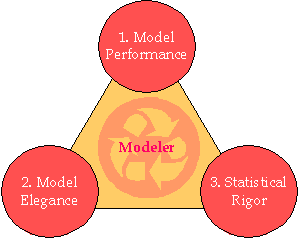
Figure 6 Trade-off Dimensions
Specifically, there are three trade-offs that are worth our attention. They are as follows:
1. Number of constructs: Trade-off between capturing the most powerful causal factors and having auto correlation: This trade-off needs to be made to determine the optimal number of constructs. A large number of constructs increases the chances of having included the most significant causal factors in the model, thereby improving the explanatory power. However, it can also result in ‘causality dilution’, where by correlation among constructs (auto correlation) prevents identification of two to three critical factors that can be addressed as genuine ‘root causes’ to direct the solution of the problem. On the other hand, having a small number of factors might avoid the autocorrelation problem, but limits the effectiveness of the modeling exercise (low explanatory power) while increasing the chances of leaving out the key constructs, that cannot be known apriori. Making this trade-off calls for business judgement on the part of the modeler to hypothesize the most important constructs for inclusion in the model.
2. Defining the causal relationships: between root cause hypotheses and the business challenge – Trade-off between complexity of model and simplicity/ease of understanding: Being very accurate in defining causal relationships requires empirical knowledge as well as business judgement. Over and above using business knowledge in defining the relationships, modelers would need to determine whether including a causal relationship adds value to the model in the context of the problem being addressed. This determination can make the difference between an extremely complex model and a simply defined model. While a complex model has an intricately woven web of causal relationships that are very difficult to communicate to a business audience, a simple model could be ineffective in identifying ‘authentic’ causal constructs.
3. Number of measures: As discussed earlier, measurement is accomplished through the use of employee questionnaires. Trade-offs exist between the number of questions in each measure and having adequate response rates and more attentive responses to the survey: This trade-off needs to be made to determine a suitable number of measures, which in turn determines the number of questions used to collect data on the measures. For accurately populating a measure with data, at least two questions per measure would be needed. More questions per measure would mean better estimation of the measure, which in turn means a better model result. On the other hand, if there were too many questions, then the number of people responding to the surveys (to collect data and populate the models) could diminish and the attentiveness to accurately address questions could go down. In the interests of statistical rigor[5] while populating the model, it is better if a large number of people respond to the surveys. The modeler can make this trade-off by exhaustively identifying a set of measures and questions and then pruning it down by applying a filter of what is most important to the organization under study. Pruning is done to arrive at a number of questions that is expected to elicit at least the minimum number of responses required to get statistical validity on the results. The modeler needs to not only have the business knowledge to exhaustively identify measures and questions in the first place, but must also make the judgments on what measures and questions are the most important to the context of the problem at hand.
The trade-offs described in this section, need to be made by the modeler, in a skillful and knowledgeable manner. Given that these trade-offs can influence the outcome of a modeling exercise to a great extent, it should be highlighted that an RCA model is only as good as the modeler. A detailed discussion on this topic is given in the working paper (Srinivasan & Horowitz, 2004).
Conclusions
And Future Work
Knowledge management is one of those management fields of study that does not lend itself to quantified study too easily. This is because concepts like knowledge management are deeply embedded in a multi-faceted way in the culture, processes, tools and people of an organization. In this research, not only was a methodology used to quantify knowledge management related challenges, but a new methodology was also devised that customized the solution identification process to the unique needs of an organization by (a) first identifying its unique social and knowledge characters, (b) then customizing our solution hypotheses to these identified characters, and (c) then using an advanced quantified ‘root cause’ identification procedure like the PLS technique.
The biggest contribution from the study is the demonstration of a methodology that successfully integrates significant concepts from the diverse fields of organizational psychology, statistical modeling and knowledge management, to address a Fortune-500 organization’s business challenge in a unique and customized manner.
Future research in this unique field of study may include among other efforts, an application of the methodology to solving other abstract organizational problems, an exploration of other concepts over and above organizational character to customize managerial problem solving and an experiment to study variations in solution performance to character-based customization versus using non-customized solutions.
References
Bontis N., Fitz-enz J., 2002, Intellectual Capital ROI: A Causal Map Of Human Capital Antecedents And Consequents, Journal of Intellectual Capital, Vol. 3, Issue 3
Bridges W., 1993, The Character Of Organizations: Using Jungian Type In Organizational Development, Blue Ridge Summit, Pennsylvania, USA, 1st Edn.
Collins H., 1993, The Structure Of Knowledge, Social Research, Vol. 60
Cross R.L., Israelit S.M., 2000, Strategic Learning In A Knowledge Economy: Individual, Collective, And Organizational Learning Process, Butterworth Heinemann, Boston, USA.
Davenport T.H., Prusak L., 1998, Working Knowledge, Harvard Business School Press, Boston, USA.
Fornell C., Larcker D.F., 1981, Evaluating Structural Equation ModelsWith Unobservable Variables And Measurement Error, Journal of Marketing Research, Vol. 18
Fornell C., 1982, A Second Generation Of Multi-Variate Analysis, 1 & 2. Praeger Press, New York, USA.
Goffee R., Jones G., 1998, The Character Of A Corporation: How Your Company’s Culture Can Make Or Break Your Business, Harper Collins, London, UK, 1st Edn.
Harvard Business Review Press, 1998, Harvard Business Review On Knowledge Management, Harvard Business Review Press, Boston, USA.
MacCoby M, 2002, Toward A Science Of Social Character, International Forum of Psychoanalysis, Vol. 11 Issue1
Myers P.S., 1996, Knowledge Management And Organizational Design, Butterworth-Heinemann, Boston, USA.
Nunnally J., 1978, Psychometric Theory, McGraw-Hill, New York, USA, 2nd Edn.
O’Dell C., Grayson C.J., 1998, If Only We Knew What We Know, The Free Press, USA.
Pfeffer J., Sutton R.I., 2000, The Knowing-Doing Gap: How Smart Companies Turn Knowledge Into Action, Harvard Business Review Press, Boston, USA.
Ruggles III R.L., 1997, Knowledge Management Tools, Butterworth Heinemann, Boston, USA.
Srinivasan A., Horowitz B.M., 2004, Use Of Simulation Experiments To Evaluate knowledge Management Modeling Quality, http://www.tlainc.com/jkmpv5.htm
Tiwana A., 1999, The Knowledge Management Toolkit: Practical Techniques For Building A Knowledge Management System, Prentice-Hall, UK, 2nd Edn.
About the Authors:
Anitha Srinivasan graduated with a
Masters in Systems Engineering from University of Virginia, Charlottesville.
She also holds a M.S. in Electrical Engineering from University of California,
Riverside. She is currently working as a Risk Management Analyst with
Constellation Energy, Baltimore, USA. Her research interests include Knowledge
Management, Intellectual Capital and Risk Analysis & Management.
Anitha Srinivasan, Garaduate
Research Assistant, Dept. of Systems Engineering, P.O. Box 400747, 151
Engineer's Way, Charlottesville, VA 22904. E-Mail: anu_vasan@hotmail.com, Phone: (410) 505
4378.
Dr. Barry Horowitz founded and
served as Chairman and CEO of Concept 5 Technologies, and served as President
and CEO of MITRE Corporation. His research interests include Knowledge
Management, Integration of Distributed Computing Systems, Rapid Application
Prototyping and Computer Security Assessments.
Dr. Barry Horowitz, Professor, Dept. of Systems Engineering, P.O. Box 400747, 151 Engineer's Way, Charlottesville, VA 22904. E-Mail: bh8e@virginia.edu, Phone: (434) 924 0306. Website URL: http://www.sys.virginia.edu/people/bh.asp